Showing posts with label israel. Show all posts

Monday, June 24, 2013

Two Years Ago in Israel

I'm glad that I keep a travel journal.   It lets me pinpoint exactly when I went somewhere.   And how young  and immature (or older and worldly), I was when I went there.  I can tell that just by my commentary.  

I knew that two years ago in June I went to Israel.  
Then I bust out the journal and I know that I actually arrived in Israel two years ago today.

On day 1 we got to put our toes in the sand 
on the shores of the Mediterranean
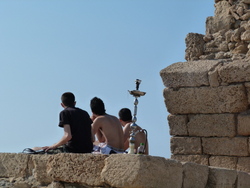
These guys were having even more fun

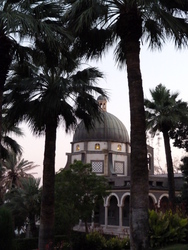
And our hotel was at the Mount of Beatitudes 
with a view of the Sea of Galilee


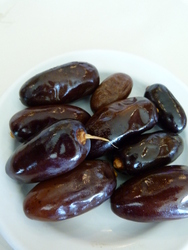
And I ate these by the plateful...

If you want to learn more about Israel, read one or more of these posts:

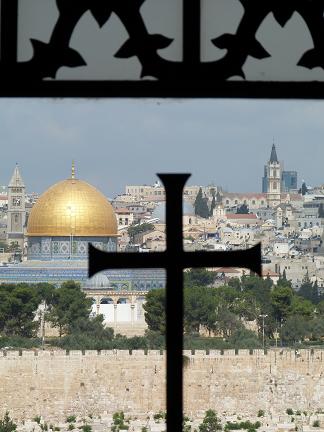
Wellshire Pilgrimage to Israel
June 23-24: Denver to Galilee
June 25: In and Around Galilee
June 26: Cana, Nazareth, and the River Jordan
June 27: Galilee to Jericho
June 28: Jericho, Dead Sea and Bethlehem
June 29: Following the Palm Sunday Path
June 29: Ancient Stairs and the Upper Room
June 30: The Wall & The Rock
July 1: Holy Sepulchre and the Return to Palestine

Have you traveled to Israel ?    What did you enjoy most?

Sunday, April 1, 2012

You'll Never Look at the Easter Story the Same Again


Nine months ago I was in Israel with a small group from my church.   Before we even left (back when we were eating Garbanzo's in our pastor's backyard), John mentioned that after going to Israel you will never look at the Christmas and Easter stories the same.   I thought about that this morning while at church for Palm Sunday.

The Palm Sunday scripture about Jesus riding into Jerusalem on a donkey while children yelled and waved palm fronds is no longer just something in a book or a painting.   I've walked down that path.

There are many things that make your faith real.   Service.  Singing.  Reading.  Friendships.  Miracles.  Visiting Israel was one of those experiences for me.

Feel free to read through any of the following posts to see what Israel is like through the eyes of a Christian.    If you haven't made your own pilgrimage, I hope you get the opportunity.

Wellshire Pilgrimage to Israel
June 23-24: Denver to Galilee
June 25: In and Around Galilee
June 26: Cana, Nazareth, and the River Jordan
June 27: Galilee to Jericho
June 28: Jericho, Dead Sea and Bethlehem
June 29: Following the Palm Sunday Path
June 29: Ancient Stairs and the Upper Room
June 30: The Wall & The Rock
July 1: Holy Sepulchre and the Return to Palestine

Saturday, July 16, 2011

July 1: Holy Sepulchre and the Return to Palestine

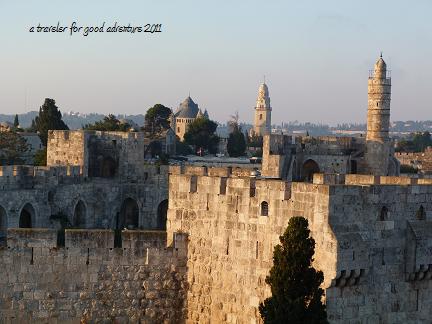
Sunrise in Jerusalem - July 1
Friday July 1 was a sad day, because it was our last day in Israel.  It started early...why sleep in on your last day in the country?  I met Dave and Lisa at our bakery in the Jewish quarter.   I had my cappuccino in hand when they walked in the door and then Lisa gave her tour guide commentary on the way back to the hotel. 


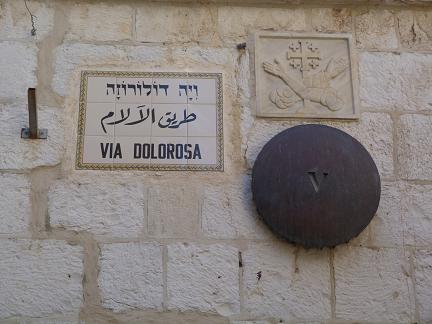
We started the day walking through the Damascus gate - the same gate I had walked through the night before.  This time, though, there was a police presence.  Why?  It's Friday.  The Muslim holy day and the start of the Sabbath.  We started by walking the Via Dolorosa - the stations of the cross.  Apparently now there are two Via Dolorosa, the traditional one and another used by Catholic pilgrims today.   Why are there 14 stations of the cross?  Because of the 14 generations mentioned in Luke and Matthew. 

Station 5 - Simon carries Jesus's cross
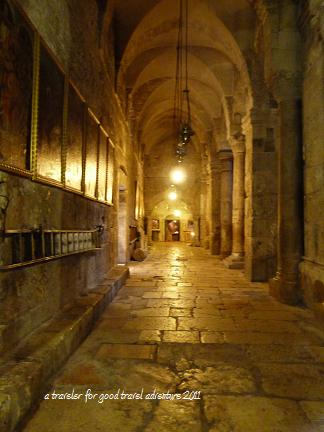
We finished at the Church of the Holy Sepulchre.  We started by going up the stairs to Calvary, where Jesus was crucified.  Unlike the artistic Christian pictures you might see that imply that Calvary was a mountain, it was really about 100 feet up a rocky up cropping off the main street.  Since crucifixion was capital punishment, they wanted the criminals above street level where everyone could see them.  The church has 6 denominations present and they each maintain some portion of the church (and do not maintain anything that doesn't belong to them). 

Inside the Holy Sepulchre
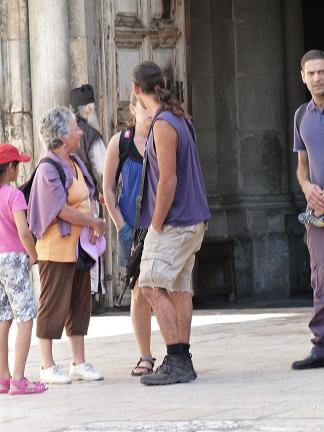
Outside the church, I had my one moment of worry of the entire trip.  A random guy came out of the church and then took his machine gun back from whoever was watching it.  It was loaded.  I felt slightly better when he grabbed the hand of a child who must have been a part of his group.  I felt even better when he went away. 
Our next stop was the refugee settlement of Dheisheh in Bethlehem.   This was a refugee camp from the war in 1948 that has morphed into a full time permanent settlement.  There were a little over 3,000 people living there in 1948, on less than a square kilometer of land, and now there are about 13,000.  We got a tour of the camp from Shaeed (exact spelling unknown) who is very passionate about the plight of the Palestinian people.   The fun part about walking through the settlement was the kids.  They didn't like to be photographed, but they loved saying hi and practicing their minimal English, as well as playing hide and seek.    To learn more about the camp and the Phoenix foundation (their cultural and recreation center) click here.

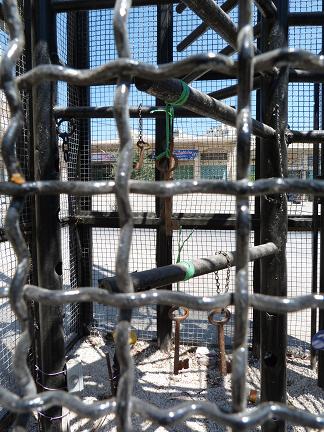
Turnstile left from when there was a gate at the settlement. 
Keys symbolize the Right of Return for the Palestinian people.
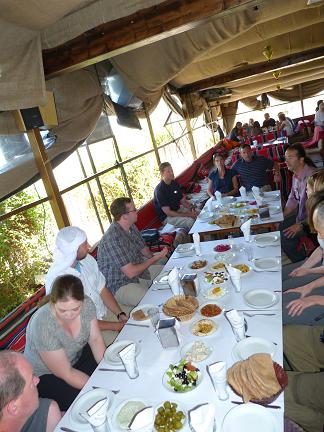
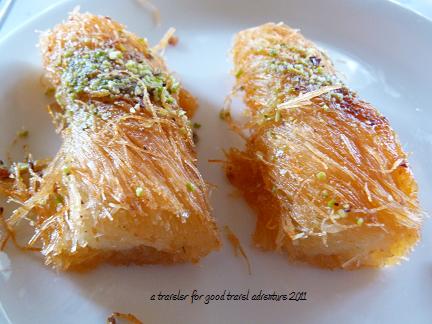
Our last group activity was our "Last Supper" our celebration lunch at a Bedouin style tent restaurant in Bethlehem called the Shepherd's Tent.  On the way we passed a bakery whose claim to fame was the Guinness World Record size Katayef (or Konnefeh) in the world.  A giant pastry.  What could be better?  Peter actually stopped at another bakery along the way to the restaurant to see if he could find one for us.  We lucked out that we were able to have it for dessert at the restaurant.    At lunch we went around the table and everyone shared their best moments of the trip.  It was fun to think about all the great moments in just 10 days of time.  What's the best?  The church service at Mt. of Beatitudes?  Floating in the Dead Sea?  Sailing on the Sea of Galilee?  Standing on the ancient stairs?  Everyone had a different memory.  

The site of our Last Supper

Not the world's largest Konnefeh, but delicious nonetheless

In the afternoon, we had time to pack, shop, nap, whatever.  I had 40 shekels left to spend.  Bought a bottle of wine, a soda and then one last cappuccino from the hotel that I drank quickly before we had to walk to the bus. 

And that's where I end my reflections of Israel. 
It's never as exciting going home from vacation as it is going. 
Hopefully these posts encourage you to experience Israel for yourself. 

Thursday, July 14, 2011

June 30: The Wall & The Rock

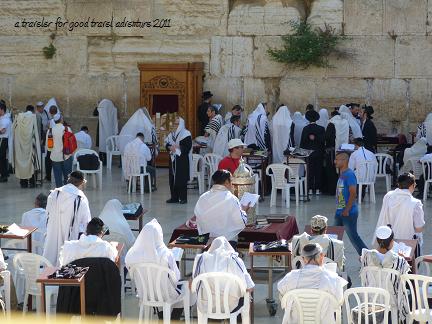
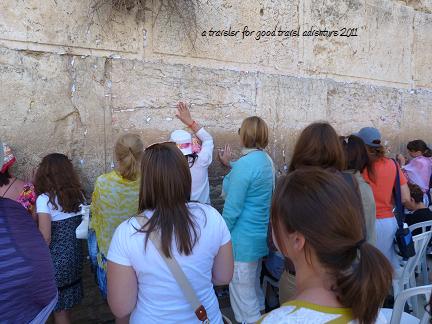
In a very small space in Jerusalem you have serious holy sites.  Thursday was the day of especially modest dress for us ladies.  Shoulders, cleavage, you name it, we covered it.  We started at the Western Wall, which is one of the most sacred spots in Judaism. Parts of the wall date back to the second temple period.  The wall is always open for prayer.  Two thirds of the wall is the male side and one third is the women's side.  While we were there, boys were celebrating their Bar Mitzvah's.   Over on the women's side, sisters, mothers and other relatives would stand on chairs and lean over the partition to watch the action as well as taking videos and photos.  At the wall, you see people rocking while they are praying, especially on the men's side.  The rocking can help keep you focused while praying - Brian said that while he was on the men's side, you start doing it because those around you are doing it - it becomes a community of prayer.

The men's side of the Western Wall
Taking my turn on the women's side

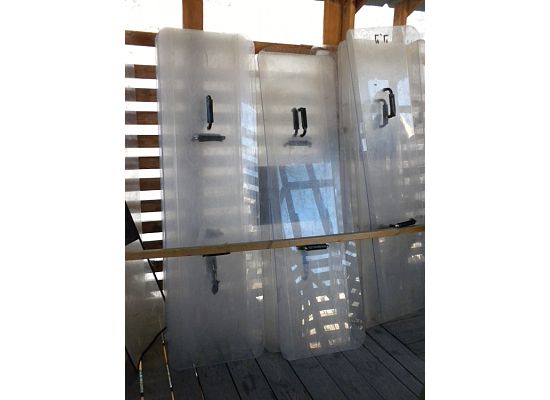
You can go from the Western Wall on to the Temple Mount - just a little more security.  

Riot gear on the bridge to Temple Mount

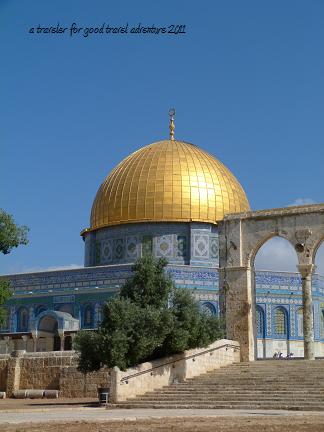
Peter, our guide, referred to the Temple Mount as the most expensive piece of real estate in the world - the value is beyond measure to the three major world religions.  The second temple was on the Temple Mount, the location of the Holy of Holies is unknown, but anyone of the Jewish faith who comes on the mount has to be careful that they don't walk over it (which is why the Chief Rabbinate has forbidden them to go on the Temple Mount).  For evangelical Christians, the second temple has to be built again for Jesus to return, so the land must remain protected.   For Muslims, this is where Mohammed ascended into heaven.   Who owns the Temple Mount?  It's a tricky question.  Under international law it is part of East Jerusalem, so it's Palestinian.   Under Israeli law it is annexed land that belongs to Israel.   There are two main structures on the Temple Mount:  The gold roofed Dome of the Rock and the El-Aqsa Mosque.


After leaving Temple Mount we went to the pools of Bethesda and the Church of St. Anne.  

John 5: 1-9

"Some time later, Jesus went up to Jerusalem for one of the Jewish festivals. Now there is in Jerusalem near the Sheep Gate a pool, which in Aramaic is called Bethesda and which is surrounded by five covered colonnades. Here a great number of disabled people used to lie—the blind, the lame, the paralyzed.  One who was there had been an invalid for thirty-eight years. When Jesus saw him lying there and learned that he had been in this condition for a long time, he asked him, “Do you want to get well?” “Sir,” the invalid replied, “I have no one to help me into the pool when the water is stirred. While I am trying to get in, someone else goes down ahead of me.” Then Jesus said to him, “Get up! Pick up your mat and walk.” At once the man was cured; he picked up his mat and walked."

We had another Presbyterian (bad) singing moment in the church, which has amazing acoustics.  Afterwards we held a prayer for healing in the gardens and had a few minutes to explore the grounds. 


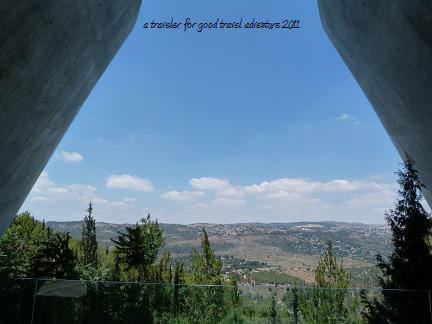
Our next visit was to Yad Veshem, the Holocaust Museum.   I've been to the Holocaust museum in Washington DC, but it was a long time ago.  The exhibit was extremely well done, and I learned a lot.   You can't take photos in the museum, but a photo wouldn't do it justice.  It's something you need to experience for yourself.

View from Yad Veshem

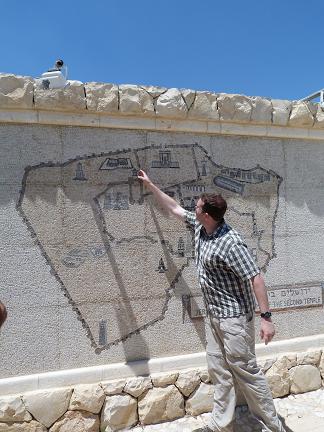
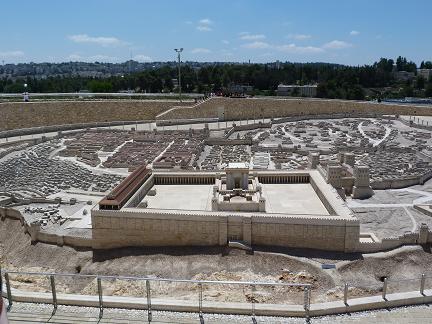
Our last visit of the day was to the Israel Museum.   We went to see two things: 1) The model of Jerusalem from the time of Herod 2) The Dead Sea Scrolls.    Throughout our time in Jerusalem we were constantly challenged to remember which place was which from the time of Jesus and what things (like the gates) were built afterwards.   As you can see below, Matt was a master at remember what valley was where and which temple was what.

Matt masters the map

Model of Jerusalem (this is Herod's temple)

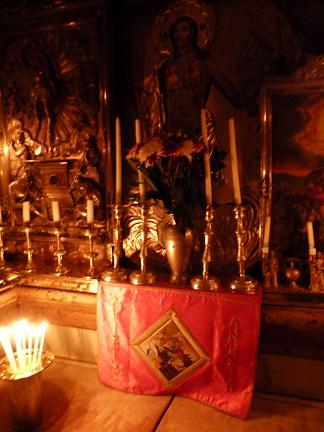
After visiting the museum we were free for the afternoon.  Due to our plans for Friday, we were encouraged to visit the Holy Sepulchre independently if we wanted to go inside the tomb because there is usually a line.   We lucked out without having to wait.   After leaving the church, I went on a bit of an exploration on my own, walking outside the gates and then entering the Muslim Quarter through the Damascus gate.  The market there was not for tourists, it was fruits and vegetables, clothes, headscarves, toys, and other things for daily life.  I got a little turned around at one point, but some guys smoking sheesha (waterpipe) sent me in the right direction and I made it back to the tourist market in time to buy some jewelry (and get some for free), chatting it up with the storekeepers.    Sitting on the roof terrace on Thursday night, knowing it was our last night in Jerusalem, soaking it all in, finishing up our wine....time well spent.

The tomb at the Church of the Holy Sepulchre
Tuesday, July 12, 2011

June 29 continued: Ancient Stairs and the Upper Room

Peter and Brian reenact Jesus telling Peter he will deny him three times
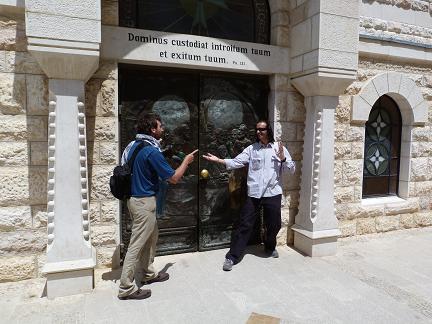
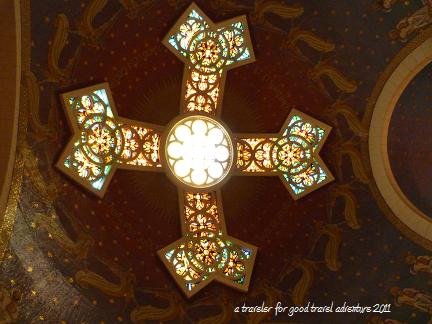
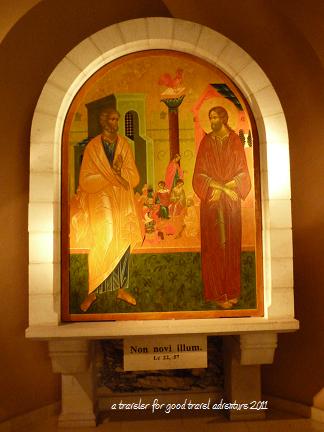
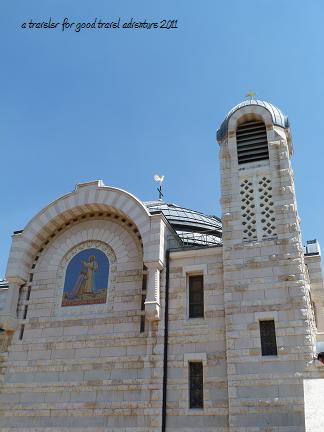
After lunch and our coffee break we went back to following Jesus's last days.  We visited the "Church of the Cock Crow" (Sancti Petri in Gallicantu) that references Jesus's claim that Peter would deny Him three times before the cock crowed (Matthew 26:34).   Most likely this church is the location of the high priests house where Jesus was first tried.  Jewish law would have prohibited any sentencing after dark, so He was put into a pit overnight and then tried first thing in the morning.   The church was beautiful and then we descended into the pit.  It is tradition to read Psalm 88 in this place.  When John was done reading the Psalm, the lights were turned off and we reflected silently in the dark pit.


LORD, you are the God who saves me;
day and night I cry out to you.
May my prayer come before you;
turn your ear to my cry.
I am overwhelmed with troubles
and my life draws near to death.
I am counted among those who go down to the pit;
I am like one without strength.
I am set apart with the dead,
like the slain who lie in the grave,
whom you remember no more,
who are cut off from your care.
You have put me in the lowest pit,
in the darkest depths.
Your wrath lies heavily on me;
you have overwhelmed me with all your waves.
You have taken from me my closest friends
and have made me repulsive to them.
I am confined and cannot escape;
my eyes are dim with grief.
I call to you, LORD, every day;
I spread out my hands to you.
Do you show your wonders to the dead?
Do their spirits rise up and praise you?
Is your love declared in the grave,
your faithfulness in Destruction?
Are your wonders known in the place of darkness,
or your righteous deeds in the land of oblivion?
But I cry to you for help, LORD;
in the morning my prayer comes before you.
Why, LORD, do you reject me
and hide your face from me?
From my youth I have suffered and been close to death;
I have borne your terrors and am in despair.
Your wrath has swept over me;
your terrors have destroyed me.
All day long they surround me like a flood;
they have completely engulfed me.
You have taken from me friend and neighbor—
darkness is my closest friend.

"No, I don't know him."
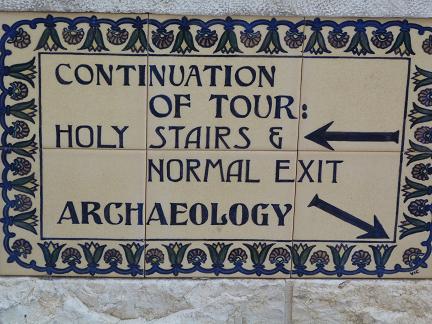
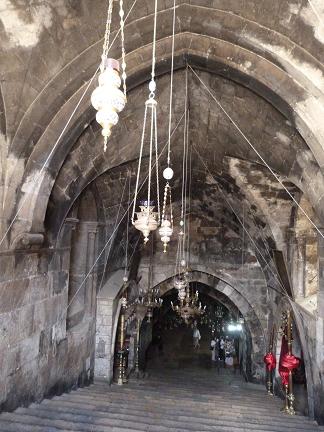
Outside of the church are the 'holy stairs.'  These stairs do date to the time of Jesus and were the ones that He walked on going in to Jerusalem. 


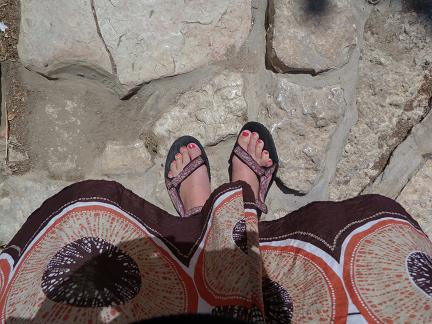
My feet where Jesus walked


Leaving St. Peter's we went to Mount Zion.  The big site here is the Coenaculum which is believed to be the room of the Last Supper.  The room in question was also used as a mosque later on in history.  The building is part of a Crusader Abbey (interesting fact - during crusader times the pelican was a sign of Christ because the mother pelican will give of her flesh to her chicks).    The Upper Room commemorates a variety of stories from the Bible including: washing feet, the breaking of bread, the descent of the Holy Spirit (pentacost), doubting Thomas, Jesus telling Judas he would betray him and Jesus telling Peter he would deny him.   The story of the Pentacost in Acts 2 was another fulfillment of a story in the Old Testament.  In the OT in the story of the tower of Babylon, people are cursed with different languages so they can't understand each other.  In the New Testament story of the the Pentacost in Acts 2, the crowd comes together with each person able to understand the story in their own tongue (the church universal is brought together in Christ).    We also had a chance to visit King David's Tomb - a big site for both Jewish and Muslim pilgrims (and in fact the only place on the entire trip where as women we needed to cover our hair). 

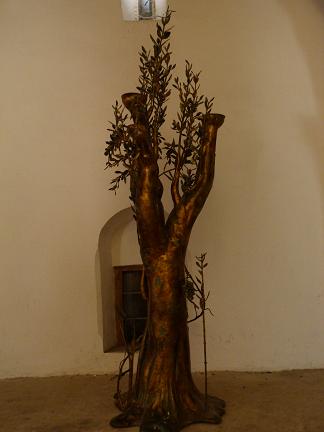
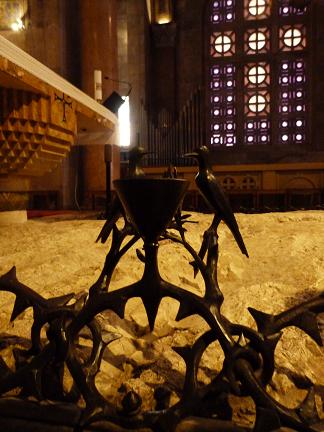
Olive Tree art in the Upper Room was a gift from Pope John Paul II
The tree symbolizes that Christianity, Judaism and Islam all stem from the same root
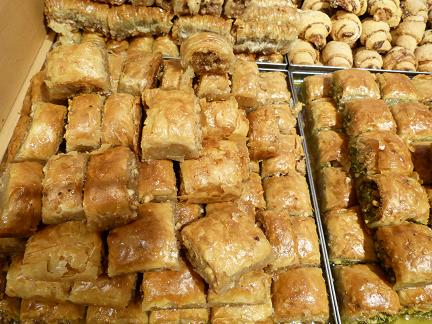
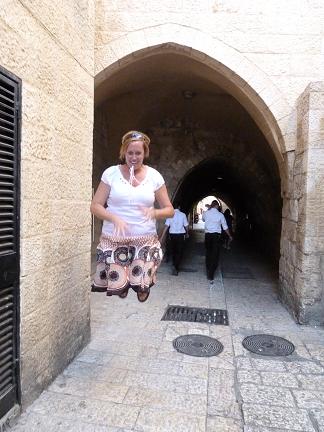
After visiting the Upper Room we were free for the afternoon and I headed to the market with Brian and Ashley.  We did some bartering for gifts to take home and then headed to a bakery in the Jewish Quarter that I found on Tuesday.   I have no idea what the name of the bakery is - all the signage was in Hebrew.  But just turn right by the Armenian restaurant go down the long alley, dodge the school kids, go down the stairs by the fruit shop and then turn right and you'll be there.   The pastries were AMAZING!  No wonder I was jumping for joy.

Pastry!

Thank you Ashley for taking this great picture!

Monday, July 11, 2011

June 29: Following the Palm Sunday Path


Neither you, Simon, nor the fifty thousand,
Nor the Romans, nor the Jews,
Nor Judas, nor the twelve
Nor the priests, nor the scribes,
Nor doomed Jerusalem itself
Understand what power is,
Understand what glory is,
Understand at all, Understand at all.
If you knew all that I knew, my poor Jerusalem,
You'd see the truth, but you close your eyes.
But you close your eyes.
While you live, your troubles are many, poor Jerusalem.
To conquer death, you only have to die.
You only have to die.

"Poor Jerusalem" - Jesus Christ Superstar

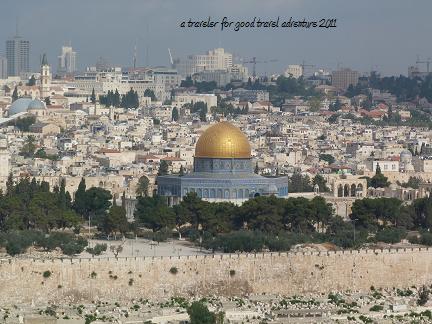
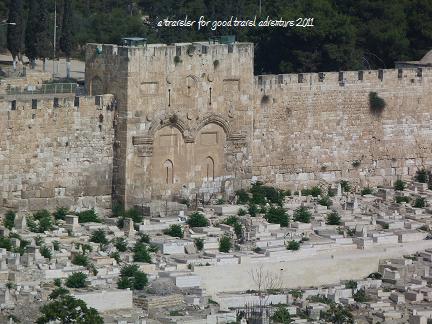
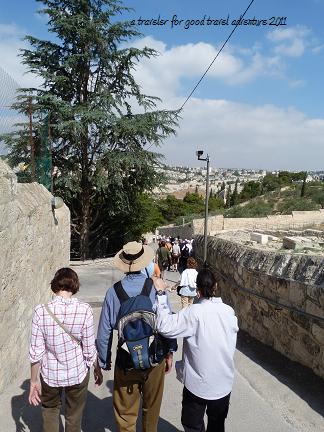
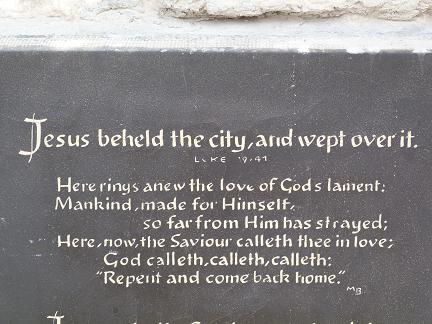
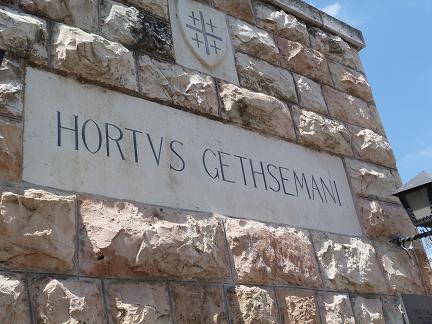
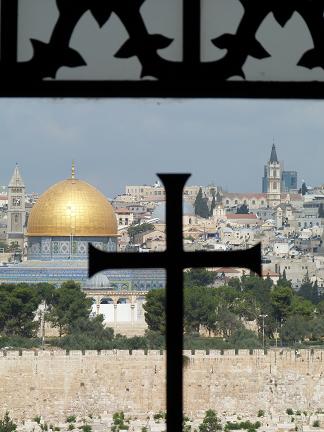
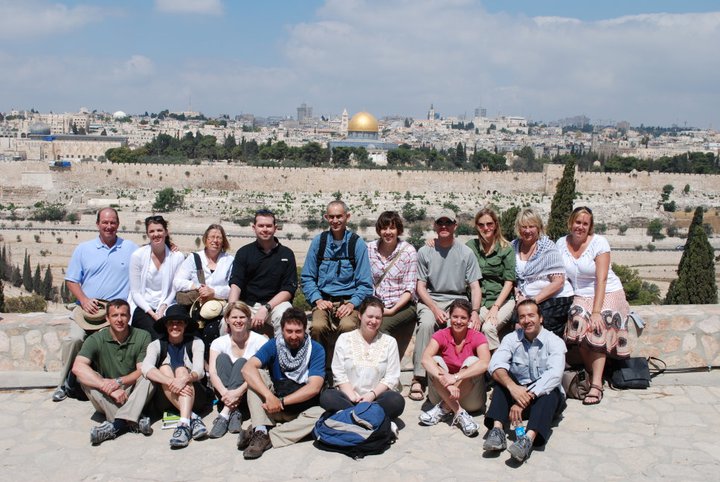
Our morning explorations outside the old city of Jerusalem on the 29th took us down the Palm Sunday Path, from the Mount of Olives, to the place where Jesus wept over the city, and to the Garden of Gethsemane and the Church of All Nations.   The picture above is of Jerusalem from the Mount of Olives.  Just below the viewpoint where this picture was taken is a large Jewish cemetery.  The reason for the location is that it would be closest to where the Messiah comes back.  The picture below is the Golden Gate, the gate that Jesus walked through on Palm Sunday and the gate through which the Messiah will return/come (depending on your viewpoint).  It was bricked over in the 12th or 13th century - trying to make it impossible for the Messiah to enter the city.


From the Mount of Olives we walked down the "Palm Sunday Path"
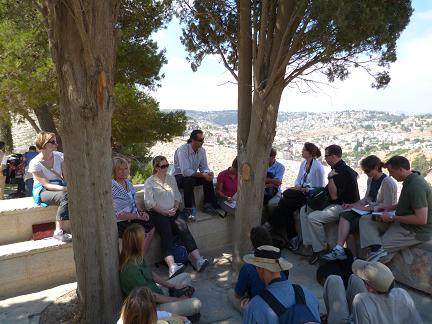
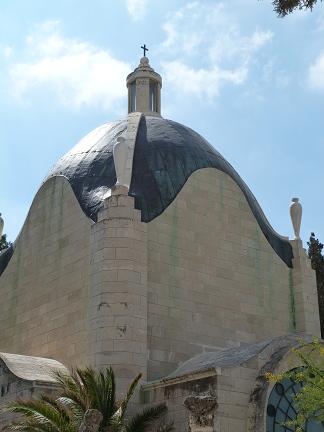
Along the path is the Basilica of Dominus Flevit, or the "Jesus Wept" Church.  Peter spoke very movingly about the plight of Jerusalem, both in the time of Jesus and the struggle that the Christians have carrying their cross there today.   The cross in the window lines up with the Church of the Holy Sepulchre (the church that marks the location of Calvary, where Jesus was crucified).  The church, or at least the roof, is made of chalk, so when it rains, the church actually weeps, and it changes color.  This was one of my favorite places.
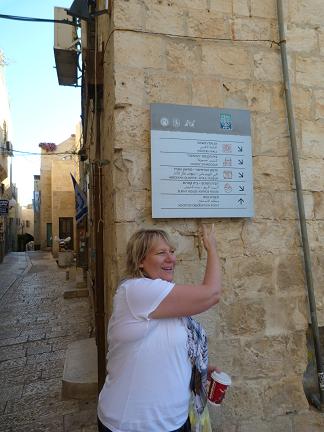

Discussion about Jerusalem outside the Basilica
The cross lines up with the Church of the Holy Sepulchre
What a good looking group!

The roof is chalk...it weeps


Garden of Gethsemane

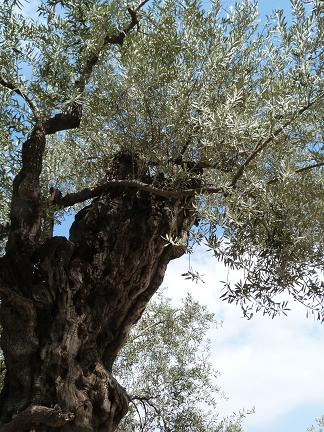
Gethsemane means oil press - oldest tree in the garden, 1000 years old

The stone where Jesus hit his knees and asked for the cup to be taken from Him
Church of All Nations


Greek Orthodox Grotto


After a busy morning on the Mount of Olives
it was time for a coffee break!


(to be continued)


Sunday, July 10, 2011

June 28: Jericho, Dead Sea, and Bethlehem


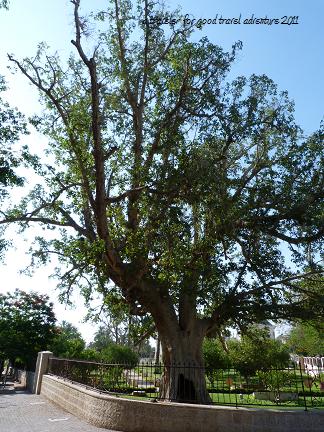
The Sycamore in Jericho
Simple Pleasure of the Day:
Something I've came to appreciate during this trip is that hot milk is served with coffee.   Something very simple that makes a big difference when enjoying my coffee at breakfast.

Geography 101:  Jericho is located in Palestine.   We saw signs while driving around town reflecting that US Aid was used to build some of the roads.  Politically this can be a hot topic as some Palestinians see it as trying to normalize life in a contentious "occupied" area. 

The sycamore pictured above is believed to be the same sycamore tree referenced in Luke 19: 1-10

"Jesus entered Jericho and was passing through. A man was there by the name of Zacchaeus; he was a chief tax collector and was wealthy. He wanted to see who Jesus was, but because he was short he could not see over the crowd. So he ran ahead and climbed a sycamore-fig tree to see him, since Jesus was coming that way. When Jesus reached the spot, he looked up and said to him, “Zacchaeus, come down immediately. I must stay at your house today.” So he came down at once and welcomed him gladly. All the people saw this and began to mutter, “He has gone to be the guest of a sinner.” But Zacchaeus stood up and said to the Lord, “Look, Lord! Here and now I give half of my possessions to the poor, and if I have cheated anybody out of anything, I will pay back four times the amount.” Jesus said to him, “Today salvation has come to this house, because this man, too, is a son of Abraham. For the Son of Man came to seek and to save the lost.”

Also in Jericho is Tell es-Sultan, where you can see some of the ruins of the ancient city of Jericho.  Just like we learned that Nazareth and Bethlehem were small villages, ancient Jericho, wall and all, was also very small.  The ruins here date back to 8000 BC.


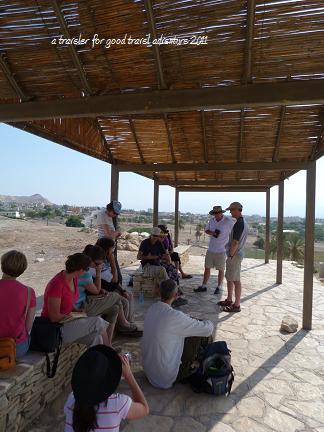
Learning at Tell es-Sultan
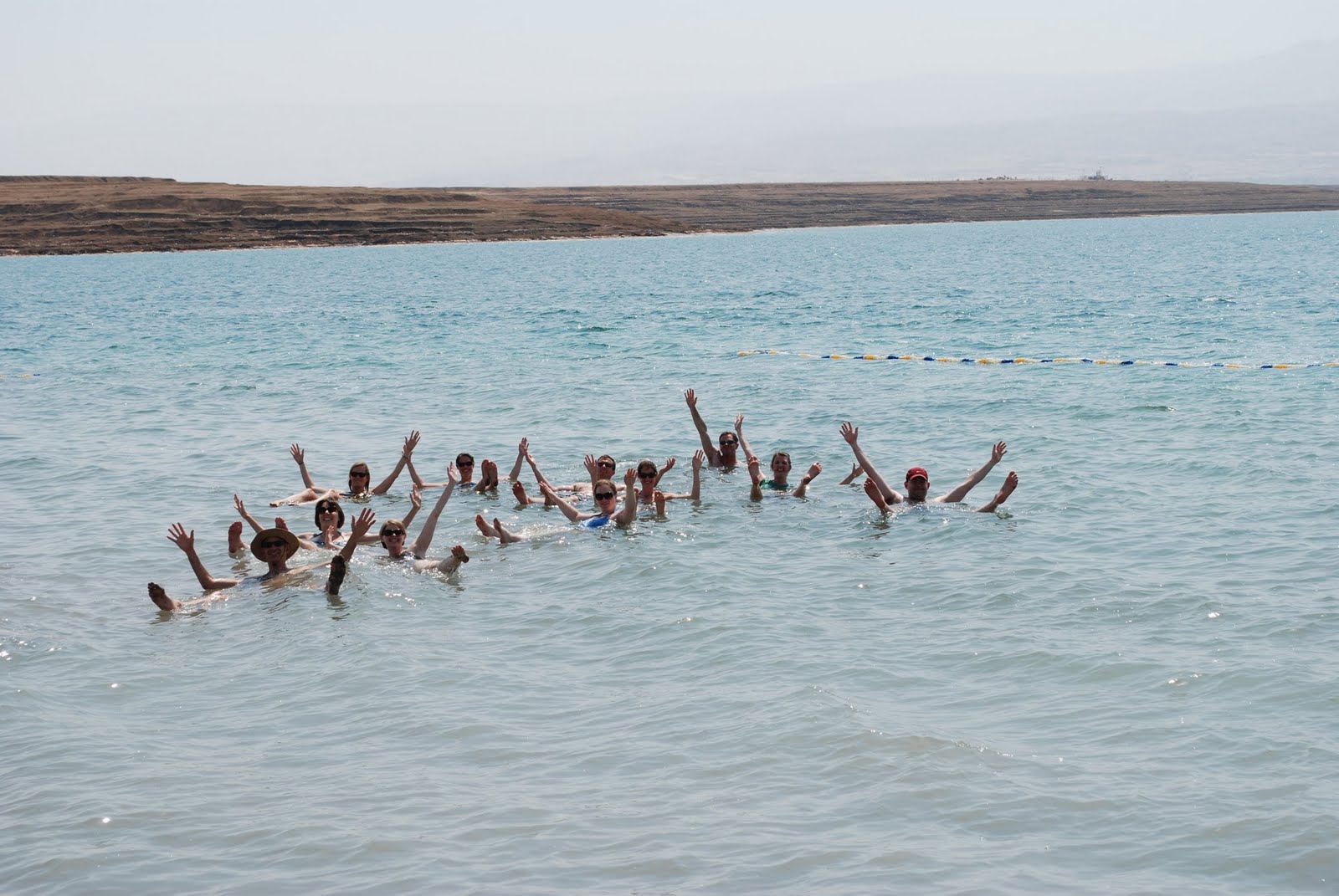
After leaving the ancient ruins, we headed to the Dead Sea.  We had an hour to enjoy floating effortlessly as well as coating our skin with the miracle mud on the sea floor.   It really did make my skin super soft.
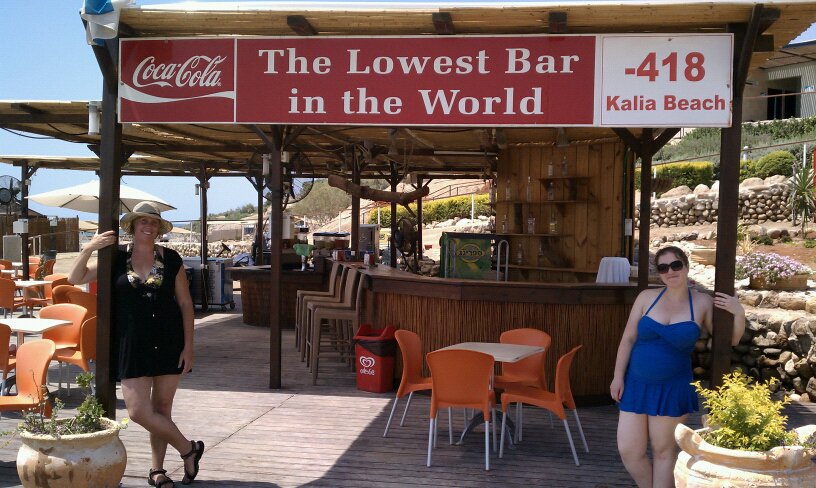
Ashley and I at the lowest bar

The Wellshire crew floating in the Dead Sea

Leaving the Dead Sea we started to make our way towards Jerusalem via Bethlehem.  Our first stop was lunch, at the Christmas Tree restaurant.  Lunch was casual and delicious, either falafel or chicken shwarma.  We also had a chance to shop for our Bethlehem souvenirs, including the famous olive wood carvings.  Naturally I was more intrigued by the small grocery store next door and stopped in to by a variety of candy to take home for my office candy dish.  Either way, we were supporting the local businesses. 

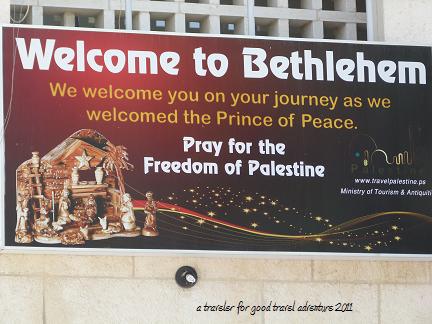
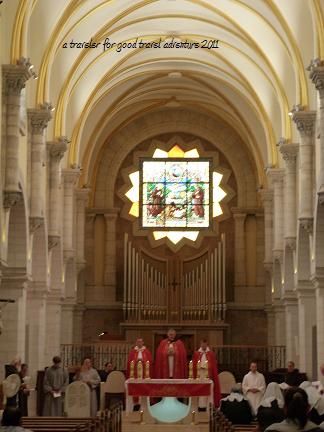
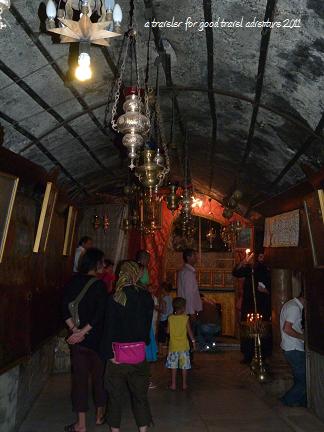
Bethlehem is in Palestine - there is a big fence and you have to go through a checkpoint to cross the border.   This is hard on their economy as well, especially this year when tourism has been dramatically down compared to 2010.  We headed to the Church of the Nativity which is the oldest still standing congregation church in the world.   We learned that in 614 there was a massacre of Christians and churches were burned, except this one.   There was a mural there that reflected the three kings, who were Persian.  The army, also Persian, spared the church for this reason.   The church is also shared by a variety of denominations, including Greek Orthodox, Armenian and Catholic.   Peter told us that Christmas is celebrated on three different dates in Bethlehem because each church uses a different calendar.  Easter is celebrated twice.   In the rest of Israel, Christmas is celebrated using the Catholic calendar, and Easter, the Orthodox (except for Jerusalem and Bethlehem). 

Quote of the day:  "It is easier for Jesus to come back than to upset the status quo." 

St. Catherine's Church - Church of the Nativity

Greek Orthodox Church - Church of the Nativity

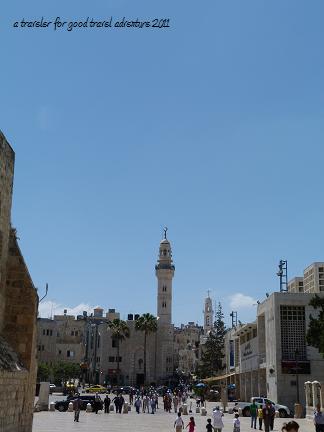
Manger Square - Mosque of Omar

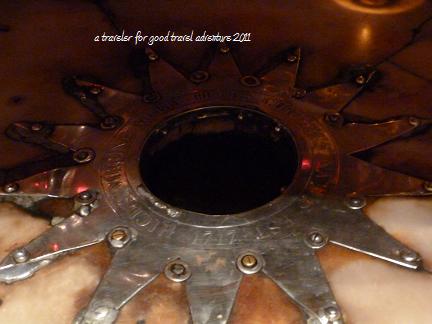
The star that marks where Jesus was born - Church of the Nativity

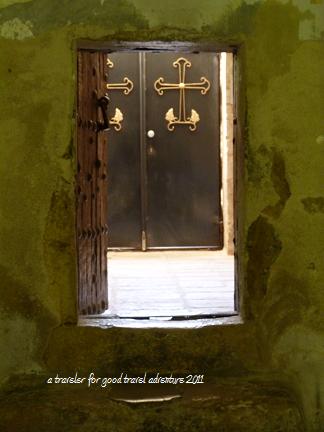
Humility Door - Stopped people from riding their horses into the church

After our visit to Bethlehem we headed to Jerusalem, our home for the remainder of the trip.  The Gloria Hotel was located inside the gates of the Old City and had a great rooftop terrace - perfect for drinking in the views of the city, as well as wine. 

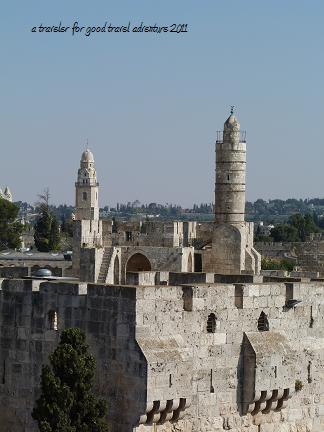
Old City Jerusalem from the Roof:


LinkWithin